Polydrugging the elderly- how did we not know?
Polydrugging the Elderly: How Did We Not Know?
There’s a haunting question echoing in the minds of many adult children, caregivers, and health advocates today:
How did we not see it?
How did we not recognize the slow erosion of vitality in our elders — not as a natural part of aging, but as the byproduct of overmedication? How many generations were affected before we stopped to ask: Are we doing more harm than good?
The Unseen Cost of Good Intentions
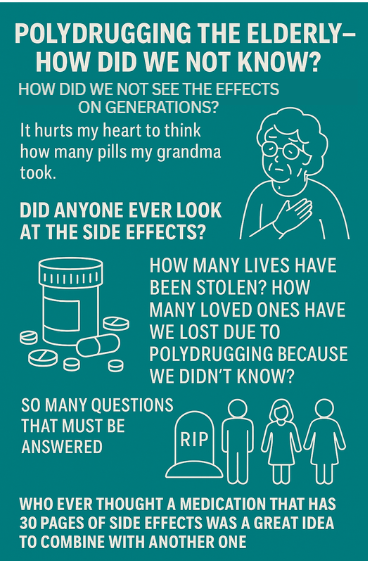
It hurts my heart to think of how many pills my grandmother took every day — a carefully sorted tray of colors and shapes, meant to manage her blood pressure, sleep, pain, nerves, digestion, and mood.
But did anyone ever stop to ask:
What are all of these medications doing together?
Did anyone read past the second page of side effects?
Did anyone realize that one drug may have created the symptom another was prescribed to treat?
We thought we were helping. We trusted. But were we blindly following a system that confused symptoms with side effects?
The Hidden Losses
How many lives have been shortened — not from illness, but from the cumulative weight of medications never meant to be combined?
How many families have lost the presence of a loved one long before their body gave out — their essence dulled, their spark dimmed — not from age, but from sedation, confusion, emotional blunting?
How many “diagnoses” were simply drug-induced symptoms, misunderstood and relabeled as disease?
We must ask these questions. We can’t afford not to.
The 30-Page Warning
Who decided that a pill with 30 pages of listed side effects was safe to combine with five others?
It’s not uncommon for elderly patients to be on 10, 12, or even more medications at once — a practice known as polypharmacy. With each addition comes new risk: interactions, duplications, contraindications. And with age comes decreased ability to metabolize and excrete these substances, compounding the danger.
Yet so often, a new symptom — confusion, depression, insomnia — is chalked up to aging or the progression of a disease, when it may in fact be a perfectly predictable result of overmedication.
The Questions That Demand Answers
We can’t go back and change what happened to our grandparents.
But we can speak up for the elders still with us.
We can ask the hard questions.
- Why wasn’t this studied more thoroughly?
- Why aren’t doctors routinely reviewing and de-prescribing unnecessary medications?
- Why do we still trust chemical cocktails more than holistic, person-centered care?
We Know Now
Polydrugging the elderly isn’t just a medical issue — it’s an ethical one.
It’s a generational reckoning.
Now that we know, we have a duty to question, to advocate, to intervene.
Because our elders deserved better.
And those still living — they deserve a chance to reclaim clarity, comfort, and dignity.
How did we not see the effects of generations?